How Enterprise and Mid-Market Restaurants Drive Revenue with Self-Ordering Kiosks
How Enterprise and Mid-Market Restaurants Drive Revenue with Self-Ordering Kiosks
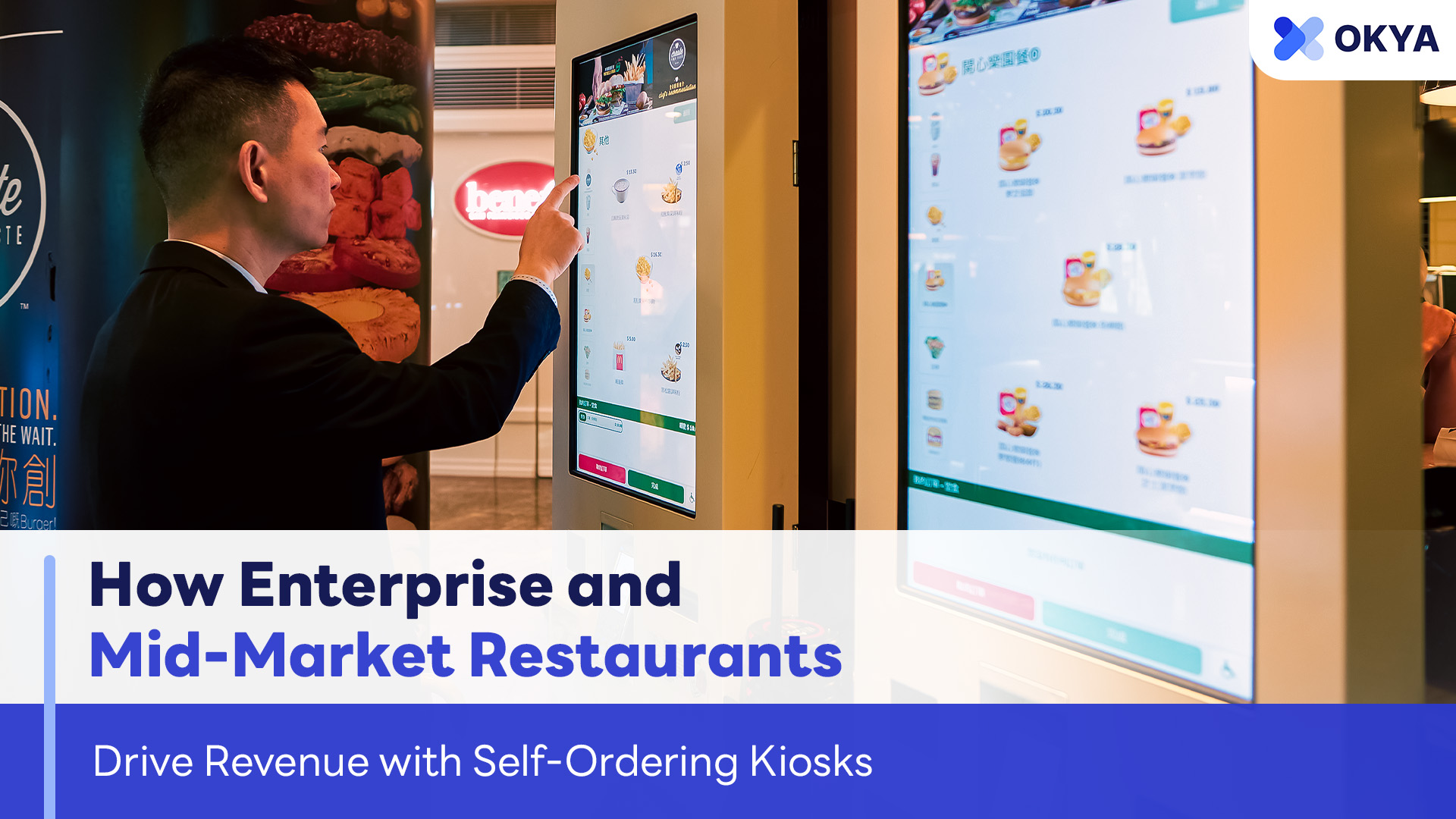
The restaurant industry, particularly among enterprise and mid-market brands—has seen a major shift toward self-ordering kiosks. While kiosks have not completely replaced traditional counters yet, they play a role alongside cashless payments and contactless delivery to create a fully customer-controlled experiences. At the same time, kiosks enhance scalability and profitability by increasing average order value and reducing operational costs, making them an essential part of modern restaurant growth.
This article will discuss the use of self-ordering kiosks in the restaurant industry, and how to deploy them effectively to increase both profits and operational efficiency.
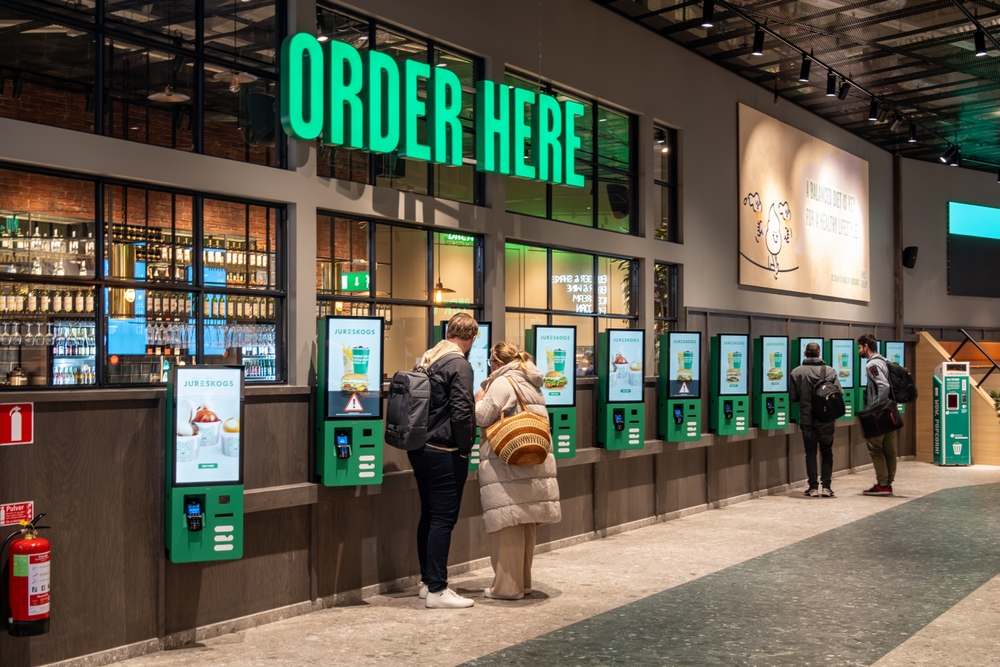
Rethinking the Counter: How Self-Ordering Kiosks Help Enterprise & Mid-Market Restaurants
When it comes to modern chain restaurants, one defining characteristic is their hour-based demand cycles: calm late mornings, busy lunch rushes, quiet mid-afternoons, bustling dinner peaks, and tranquil late nights. This pattern has led to an operational need closely tied to sales and profitability—the ability to manage high-volume throughput during peak hours while maintaining consistency across multiple locations and ensuring smooth operations regardless of transaction complexity.
In addition, customer demands have changed in recent years - not only do they require a faster process, but they also require an extensive level of personalization: custom orders, dietary modifications, and add-on selections. This creates a challenge for staff in handling these demands because personalization requires back-and-forth communication that extends transaction time and might result in delays, long lines, and lost sales. In addition, increasing staff isn’t an effective solution because it only adds unnecessary overhead during non-peak hours.
This is the place where automation via a self-ordering kiosk solves mutiple challenges at once: guest experience being unified throughout the common menu and ordering system; allowing personalization without disrupting the pace; coping with peak demand through parallel processing capacity; and offering scalablility as a ready-to-deploy system. With multiple kiosks operating alongside traditional counter service, restaurants can maintain smooth customer flow without increasing manpower.
Why Restaurants Are Turning to Self-Ordering Kiosks Now More Than Ever
Over recent years, you may have noticed the widespread adaptation of self-ordering kiosks across restaurant chains, from quick-service brands to fast-casual concepts expanding their counter operations via digital ordering. This shift is caused by multiple factors that have made self-ordering kiosks more viable than before, including:
- Labor cost: Rising wages continue to be one of the most visible pressures on restaurant profitability. For multi-location brands, efficiency comes from how effectively each staff member’s time is utilized — from order taking and food prep support to customer service and delivery coordination. When staff are tied to a POS terminal during peak hours, it limits their ability to support other critical stations. On top of that, training staff to use different POS systems across branches adds both time and cost.
- Generational Changes: Younger customers are digital natives, already comfortable with mobile apps s and self-ordering kiosks are available everywhere, from airports to zoos. The familiarity makes them familiar with self-ordering kiosks and they prefer it due to the speed and accuracy it provided. In addition, modern kiosks are designed with “zero learning curve in mind”, making it easy to use regardless of age or education.
- Contactless operation: Originally driven by the health concerns, customers now prefer the additional benefits of contactless ordering. Customers now value faster service, elimination of miscommunication, and the ability to browse options without feeling rushed. Supported by contactless payment and delivery, kiosk ordering fits seamlessly into this customer-driven evolution.
- Scalability advantages: With a self-ordering kiosk, a restaurant can achieve both consistency and personalization goals within the same time - identical menus, pricing, and promotional messaging; and personalized data of membership and loyalty program is accessible regardless of location or time of day. Whether for a dozen or a thousand stores, updates and experiences remain consistent.
- Technology maturation: Hardware costs have dropped, and modern kiosk software integrates easily with POS, CRM, and loyalty systems. This interoperability enhances order accuracy, automates data flow, and drives higher ROI through improved efficiency — all from a single connected investment.
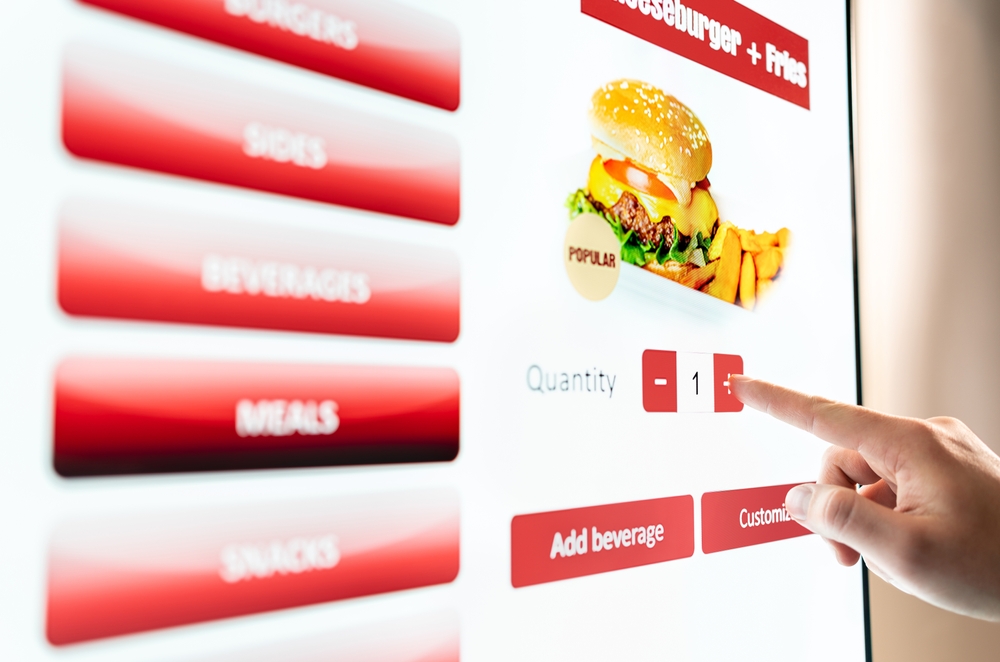
From Self-Service to Smart Service: The New Role of Kiosks in Hospitality
- Deploying self-ordering kiosks today is no longer just about adding new “input hardware” to your operation, they now function as operational gateways. These are the connection points where customer interactions translate directly into integrated restaurant systems through two-way data exchange: pulling real-time operational information to display for guests, while simultaneously feeding transaction data, preferences, and purchase patterns back into the POS, kitchen, and CRM infrastructure. This gateway role impacts four critical operational dimensions:
- Maintaining customer flow: With parallel transaction processing capacity, the kiosk prevents queue bottlenecks during peak hours. Unlike counter-only operations, where throughput is constrained by cashier count, a kiosk helps maximize revenue capture by processing peak-hour transactions that would otherwise be lost to queue abandonment or extended wait times without requiring proportional increases in staffing.
- Input for personalization and loyalty programs: Integrated kiosks function as data capture mechanisms within customer relationship management systems. When connected to CRM infrastructure, kiosks pull member profiles to display customized offers and preferences, while simultaneously pushing transaction data back to loyalty programs. This standardized interface ensures a consistent brand experience across all locations, while empowering customers to “buy what they desire” at their own pace.
- Feeding consistent data across operations: System integration ensures real-time data synchronization across point-of-sale, kitchen displays, and inventory management. Orders placed at kiosks flow directly to kitchen prep stations without manual re-entry, while menu updates and pricing changes deploy instantly across all ordering channels. This provides headquarters with centralized control over multi-location operations—menu changes, pricing adjustments, and promotional campaigns roll out simultaneously across all stores. This could enable both standardization (like nationwide promotions) and customization (such as variable pricing) without requiring individual site jobs.
- Specialization of available workforce: Kiosks free staff from fixed counter duties, enabling flexible deployment where demand is highest—whether in food prep during rush hours, coordinating deliveries, or handling guest engagement during off-peak times. This real-time allocation keeps labor costs efficient while maintaining service quality.
With the deployment of a 'smart' kiosk, the operational tasks of managing customer flow and maintaining consistency become automated, allowing management to focus on strategic work: improved customer experiences, impactful promotional campaigns, effective upselling sequences, and optimizing operations for maximum revenue and profitability.
From Setup to Scale: How Okya Simplifies Kiosk Deployment
For restaurant brands expanding self-ordering kiosks across multiple locations, success depends not only on reliable kiosk hardware but also on a comprehensive system that connects with existing operational infrastructure - from POS, CRM, KDS, and payment processing—without custom development or middleware complexity. This is where Okya, the All-in-One Restaurant Chain Solution, provides a truly unified foundation. Okya transforms kiosks from simple ordering terminals into intelligent operational gateways, ready to scale effortlessly across your entire network.
Built for enterprise and multi-location restaurant brands that need rapid deployment with centralized control from the start, Okya is the solution that helps your restaurant brand deliver true Online-to-Offline (O2O) connectivity through its modular architecture. From day one, each deployment includes the full infrastructure required for smart kiosk operations: unified menu and pricing management, intelligent order routing to kitchen displays, real-time synchronization, CRM integration for member recognition and loyalty programs, and multi-gateway payment support.
Trusted by the fastest growing brands across Asia looking to unify their operations and scale globally, Okya delivers a ready-to-deploy kiosk system that functions as a fully integrated operational gateway—without middleware, custom APIs, or fragmented tools.The infrastructure delivers automated synchronization across all touchpoints, real-time operational visibility for management oversight, and comprehensive performance analytics that enable continuous optimization of both technology and service delivery.
Whether you’re a small restaurant piloting kiosks at select locations or a large chain pursuing standardized rollouts across hundreds of stores, Okya offers the scalability, speed, and stability to make it happen. If you’re interested in integrating Okya’s kiosk ecosystem into your restaurant workflow, our team is ready to connect for a demonstration and consultation.