Best Order Management System for Multi-Unit Restaurants
Beyond the Kitchen: What Makes an Order Management System Work for Multi-Location Restaurants

In the restaurant industry, growth is the ultimate double-edged sword. Opening a second, third, or tenth location is a clear signal of brand resonance and culinary success. However, as the physical footprint expands, the operational complexity doesn’t just double—it multiplies exponentially.
For multi-location operators, the primary challenge isn’t the recipe; it’s the data. When different branches operate on fragmented systems, the "brand" begins to dissolve into a collection of loosely related kitchens. To maintain a cohesive guest experience and healthy margins, the modern enterprise requires a centralized "nervous system".
This is where a high-performance order management system (OMS) transitions from a back-office utility to a critical driver of digital transformation. By centralizing control and humanizing technical complexity, platforms like Okya help multi-location brands scale with confidence.
The Chaos of Fragmentation: Why Traditional POS Fails the Enterprise
Traditional Point of Sale (POS) systems were designed for a single counter and a single kitchen. They excel at processing a transaction but often struggle to communicate across a network. When a restaurant group scales, fragmentation manifests in three "silent killers":
- The "Tablet Hell" Phenomenon
As brands expand their off-premise reach, they often find themselves buried under a mountain of proprietary tablets from various delivery partners. This creates manual entry errors and pulls staff focus away from the in-house guest
- Data Silos
When each location stores its own sales and labor data locally, getting a bird's-eye view of the organization becomes an arduous task of manual spreadsheet consolidation.
- Menu Drift
Without centralized control, small changes—like a price update or an out-of-stock item—might happen at one site but not another. This inconsistency erodes brand trust and confuses customers who expect a uniform experience.
Centralized Control: The "Single Source of Truth"
The hallmark of a world-class order management system is the ability to manage the entire enterprise from one dashboard. This creates a "single source of truth" for the business, ensuring that every decision is based on real-time, accurate data.

Universal Menu Management
In a multi-unit operation, the menu is dynamic. Supply chain fluctuations might require an immediate price adjustment. A centralized order management system allows a brand manager to push updates to all locations—or a specific subset of locations—with a single click. This ensures that the digital menu on the website, the third-party delivery apps, and the in-store kiosks are always in perfect sync.
Permissions and Hierarchy
Not every employee needs access to group-wide data. A sophisticated system allows for granular permissions. A store manager can see their specific labor costs and inventory, while the regional director can compare performance across the territory, and the CFO can view the high-level financial health of the entire organization.
- Store Managers: Can see their specific labor costs and inventory.
- Regional Directors: Can compare performance across the territory.
- CFOs: Can view the high-level financial health of the entire organization.
Seamless Integration with the Delivery Ecosystem
The "off-premise" market has fundamentally changed restaurant economics. For multi-location brands, managing delivery at scale is a logistical nightmare without direct integration.

Direct Injection into the KDS
Modern order management system solutions bypass the need for manual tablet entry by injecting orders directly into the Kitchen Display System (KDS). This reduces preparation errors and speeds up fulfillment times.
Optimizing the "Last Mile"
By aggregating delivery data, operators can identify bottlenecks in the "last mile" of service. Whether it is driver wait times or packaging issues, a unified system provides the visibility needed to refine the delivery experience.
Real-Time Inventory and Supply Chain Visibility
Inventory is often the largest variable cost for a restaurant. In a multi-location environment, food waste and "dead stock" can quickly drain profitability.
Cross-Location Stock Tracking
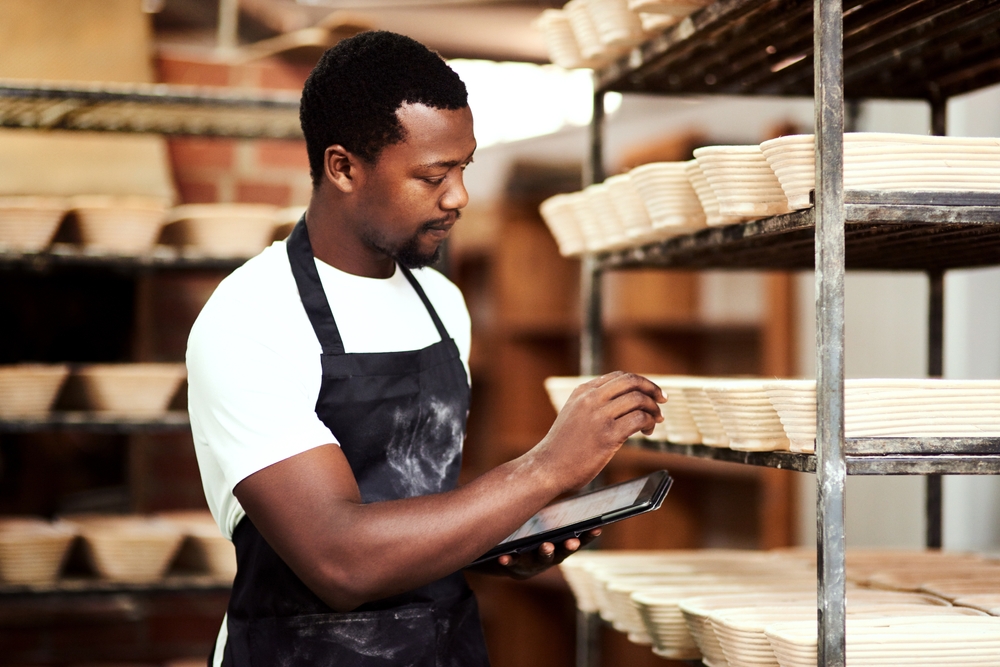
A robust order management system provides real-time visibility into stock levels across all sites. If one location is overstocked on a particular protein while another is running low, the system can facilitate internal transfers, reducing waste and saving money.
Automated Procurement
To stay ahead of shortages, high-performance systems use automated procurement tools. By setting "par levels," the system can automatically generate purchase orders when stock hits a certain threshold, ensuring the kitchen never misses a beat.
Leveraging Data for Scalable Growth
Data is the bridge between a "lucky" restaurant and a "sustainable" brand. A multi-locationorder management system aggregates millions of data points into actionable insights.

Comparative Reporting
Operators can use comparative reporting to understand why one location is outperforming another. Is it a higher average check? Better labor efficiency? Or perhaps a specific menu item that is trending in one region but not another?.
Labor Optimization
By analyzing sales patterns against labor hours, the system helps managers create more efficient schedules. This prevents overstaffing during slow periods and ensures the team is ready for the "rush," protecting both margins and staff morale.
The Human Element: Training and Adoption
No matter how powerful a technology is, it is useless if the frontline staff find it a burden. Digital transformation must be "humanized" to be successful.
- Intuitive User Interface (UI): The software should be as easy to use as a smartphone. A clean, intuitive UI reduces training time and lowers the barrier to entry for new hires.
- Reliable Support: In the fast-paced restaurant world, downtime is not an option. Access to 24/7 technical support ensures that issues are resolved before they impact the guest experience.
Enhancing the Guest Experience
At the end of the day, the technology exists to serve the guest. A unifiedorder management system allows for a "Guest 360" view. If a customer is a loyal regular at the original branch, they expect to be recognized when they visit the new location across town. A centralized system links loyalty programs and preferences to a single profile. Whether they order via the app, a kiosk, or a server, the brand "knows" them. This personalization is the secret to driving repeat visits and increasing the lifetime value of every customer.

Conclusion: The Path Forward with Okya
The transition from a single-location mindset to a multi-unit powerhouse requires more than just better recipes; it requires a superior digital architecture.
An order management system that centralizes control, integrates delivery, manages inventory in real-time, and provides deep analytical insights is the foundation of modern restaurant success. It allows founders and operators to stop "fighting fires" at individual locations and start focusing on the big picture: brand expansion and long-term profitability.
At Okya, we don't just provide a POS; we provide the tools for digital transformation. By simplifying the complex and humanizing the technical, we help multi-location brands scale with confidence.
Ready to take your brand to the next level?
Scaling shouldn't mean losing control of your kitchen or your brand consistency. From real-time inventory to universal menu management, Okya provides the digital architecture you need to expand with confidence. Let us handle the technical complexity so you can focus on the guest experience.
[Discover How Okya Powers Multi-Location Success]


