Managing Multi-Platform Delivery: How to Reduce Errors and Increase Speed

Managing Multi-Platform Delivery: How to Reduce Errors and Increase Speed

In the current culinary landscape, delivery isn’t just an add-on anymore—it’s the engine of growth for most successful restaurants. While the shift toward digital ordering has unlocked massive revenue potential, it has also introduced a complex layer of operational friction. As restaurant owners expand their reach across GrabFood, ShopeeFood, and their own direct-to-consumer web platforms, a new and dangerous challenge emerges: operational chaos.
The struggle to manage multiple tablets, manually re-enter orders into a Point of Sale (POS) system, and juggle mismatched menus across four or five different screens is a recipe for disaster. This phenomenon, often referred to as "tablet hell," leads to two significant growth killers: human error and slow fulfillment. To stay competitive in 2025, successful restaurant chains are moving away from fragmented workflows and toward centralized back-of-house (BOH) systems.
By unifying every delivery channel into a single source of truth, brands can finally focus on what they do best—cooking great food—while technology handles the heavy lifting of logistics.
The Reality of Multi-Platform Delivery: Why Fragmentation Fails
The growth of third-party delivery channels like Grab, Lineman, and Robinhood has fundamentally changed how restaurants interact with their customers. However, behind the promise of expansion lies an often-overlooked operational nightmare: fragmented systems.
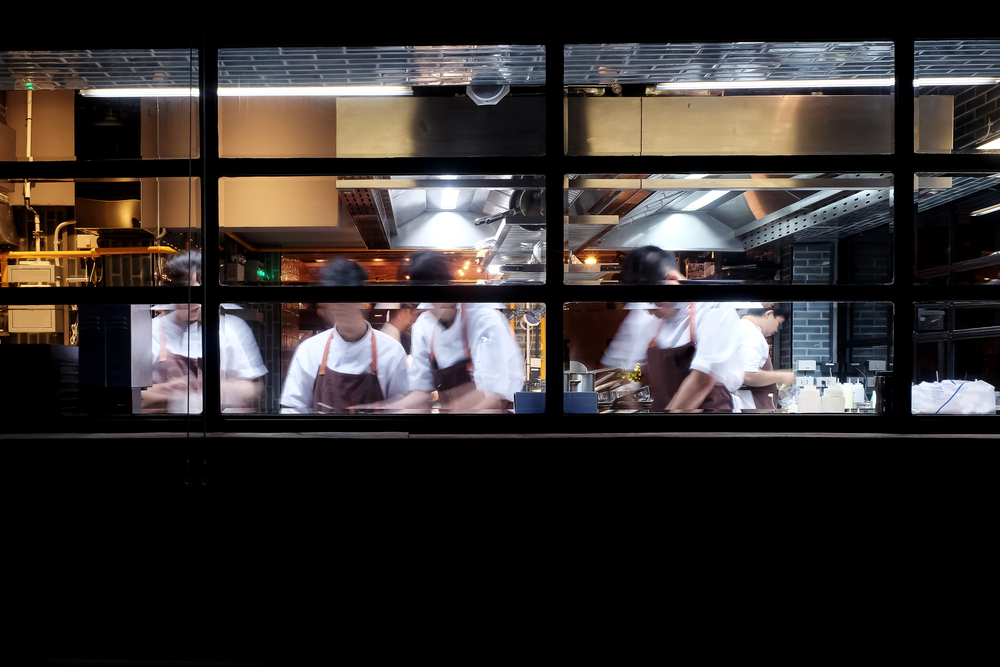
Most kitchens were never designed to handle five tablets, three different menus, and a dozen varying notification sounds. When these systems don't talk to each other, the result is inevitably slower service, avoidable errors, and lost revenue.
The Problem with "Tablet Hell"
Every major delivery platform provides its own software—and often its own tablet. For restaurants operating on multiple platforms, the result is a counter filled with devices, each demanding attention from already busy staff.
What starts as “more sales channels” quickly turns into operational chaos.
A typical restaurant running three to five delivery platforms must deal with:
Orders arriving in multiple places
Each platform sends orders to its own tablet. During a rush, staff must constantly watch several screens to make sure nothing is missed. If an order goes unnoticed for even a few minutes, it can lead to cancellations, penalties, and lower rankings on the platform.
Manual order re-entry into the POS
Because most delivery apps don’t connect directly to the restaurant’s POS, staff must manually type each order into the system just to send it to the kitchen. This creates unnecessary work and introduces mistakes—missing modifiers, incorrect quantities, or wrong items.
Menu updates across multiple platforms
A simple menu change—such as marking an item out of stock or adjusting a price—must be updated separately on every delivery app. If one platform isn’t updated, customers can order items that are no longer available, leading to refunds and frustrated guests.
Inventory and availability mismatches
Without centralized control, restaurants must pause items or close stores individually on each tablet. In a busy kitchen, it’s easy to forget one platform, resulting in orders that the kitchen cannot fulfill.
Staff distraction during peak hours
Instead of focusing on food quality and speed of service, staff are forced to monitor multiple tablets, confirm orders, adjust menus, and coordinate pickups. The kitchen becomes a control center for delivery apps rather than a place focused on production.
This problem is commonly known as “tablet hell.”
It’s not just clutter—it’s a workflow problem that slows kitchens down, increases errors, and creates unnecessary stress for staff.
For high-volume restaurants, the more delivery platforms they join, the worse the problem becomes.
The Hidden Cost of Platform Silos
Imagine a scenario where an employee is settling an in-store payment on the POS while a delivery order quietly drops on a tablet behind them. No one hears the alert; no one sees the screen flash. That single missed order turns into a canceled ticket, a frustrated customer, and a platform penalty that can negatively impact your listing rank for weeks. This is the reality of operational blindness—the more platforms you add, the higher the risk becomes.
Manual Data Entry: The Mother of All Errors
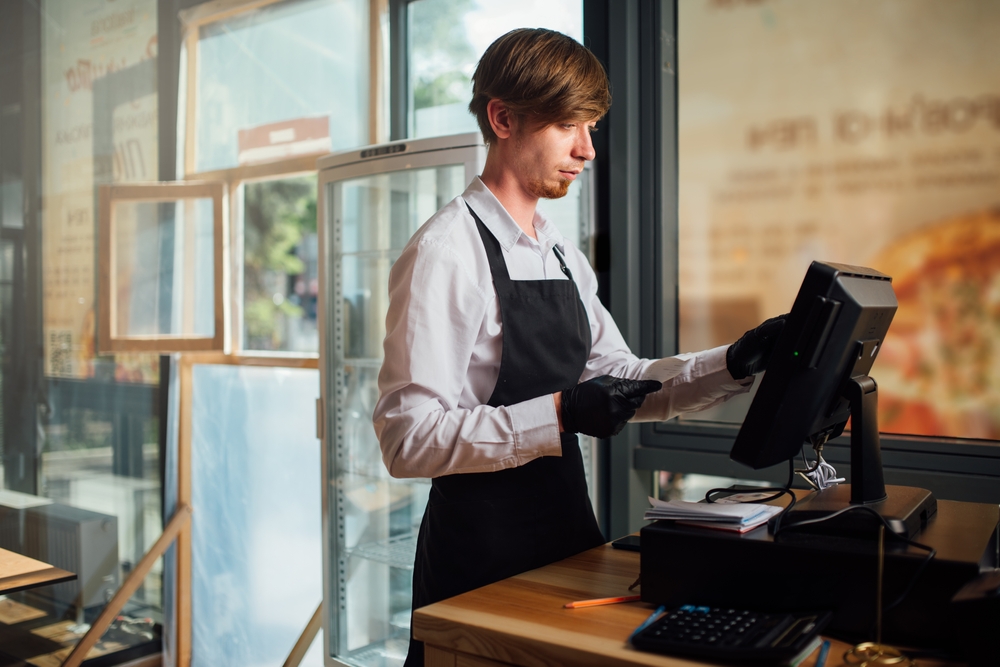
Even when orders are noticed in time, the requirement to retype them manually into the POS or kitchen system creates a high-friction workflow that is both slow and error-prone.
Common Failure Points
Manual entry errors are "cost centers" that bleed a restaurant's profitability. Common mistakes include:
- Missing Modifiers or Add-ons: A "no onions" request is skipped during the rush.
- Wrong Cook Times: A rare steak is entered as well-done.
- Address/Contact Errors: A mistyped phone number leads to a failed delivery.
Industry benchmarks suggest that up to 10% of all delivery orders are compromised by manual entry errors, resulting in expensive refunds, re-cooks, and wasted labor.
How Centralized Back-of-House Systems Work
A centralized BOH system, such as the one offered by Okya, functions as the operational command center of your delivery business. Rather than relying on manual inputs, it creates a single point of coordination between third-party platforms and your kitchen.

Core Functions of Centralization
- Unified Order Injection: All orders flow into one system automatically.
- Real-Time Inventory Syncing: When an item runs out, it is paused across all platforms simultaneously.
- Global Menu Management: Update a price or a description in one place, and it reflects everywhere.
Reducing Errors Through Automation
In the world of delivery, accuracy equals trust. A single wrong modifier can result in bad reviews and lost customer lifetime value. Centralized systems reduce this risk by removing the need for staff to act as middlemen between devices.
Eliminating the "Lost in Translation" Effect
When orders flow directly from a customer’s phone to the Kitchen Display System (KDS), there is no opportunity for misinterpretation. Special requests—like "extra sauce" or allergen alerts—are passed through exactly as entered. Instead of relying on staff to catch every detail across different apps, the system carries them through programmatically.
Automated Dispatch and Courier Coordination
Errors often happen during the hand-off to the driver. Centralized systems can track courier status relative to the kitchen's progress. If a driver is two minutes away, the system can:
- Notify staff to bag the order just in time.
- Ensure the correct bag matches the correct courier.
- Maintain food temperature integrity by reducing idle time.
Increasing Speed: The 2025 Delivery Competitive Edge
Speed is a critical metric that directly influences your search ranking on delivery platforms. Most algorithms prioritize restaurants with the shortest "Prep-to-Handover" time.
Shaving Minutes Off Every Order
- Real-Time Order Injection: With Okya, all channels feed directly into the POS. Over 100 daily orders, this automation can save up to 3 hours of labor every single day.
- Intelligent Kitchen Sequencing: A centralized KDS allows the kitchen to see an optimized production queue. The system can group similar items (e.g., "Fire 4 Wagyu Burgers") even if they originated from different platforms. This batching capability is essential for high-volume delivery hubs.
- Operational Analytics: Managers can use "Order Cycle Time" analytics to identify bottlenecks—whether it's the prep station, packaging, or courier arrival times. As the saying goes, "You cannot improve what you do not measure".
The Strategic Benefits of a Centralized Admin Dashboard
Beyond the heat of the kitchen, centralization transforms business management. When data is siloed, it is nearly impossible to get a clear picture of profit margins. A centralized dashboard offers:
- Holistic Reporting: See performance across all channels in one view.
- Reduced Labor Costs: Minimize the staff needed for data entry and tablet monitoring.
Scalability: Adding a new platform or a new location becomes a "plug-and-play" process rather than a logistical nightmare.
Future Trends: AI and Predictive Logistics
As we move into 2026, centralized BOH systems are becoming even smarter, entering the era of Predictive Delivery. Emerging technologies include:
- AI Demand Forecasting
Modern systems are beginning to analyze historical orders, time-of-day patterns, weather conditions, and promotional activity to predict delivery surges before they occur. This allows kitchens to adjust staffing levels, prep ingredients earlier, and avoid bottlenecks during peak periods. - Kitchen Capacity Intelligence
Instead of accepting unlimited orders, advanced systems will be able to throttle or pace incoming delivery demand based on real-time kitchen capacity. This prevents overload situations where order volume exceeds what the kitchen can realistically produce. - Predictive Courier Coordination
By analyzing courier locations and preparation times, systems can synchronize the kitchen workflow with driver arrival. This helps ensure food is finished at the right moment—reducing wait times, cold food, and driver congestion.
Operational Automation
As delivery volumes grow, restaurants are increasingly relying on automation to handle repetitive tasks such as order confirmation, dispatch timing, and platform synchronization. This reduces manual intervention and allows staff to focus on food preparation and guest experience.

Conclusion: The Path to Profitable Delivery
The ultimate goal of any restaurant is to provide a seamless experience for the guest. In a multi-platform world, that experience is determined by the efficiency of your back-of-house.
By implementing a centralized system like Okya, you are making a strategic investment in:
- Lower Refund Rates by reducing human error.
- Higher Search Rankings by increasing fulfillment speed.
- Better Employee Retention by removing the stress of manual data entry.
Ready to take control of your delivery operations?
Don’t let "tablet hell" hold your restaurant back. Streamline your kitchen, eliminate manual errors, and scale your brand with the industry's most robust centralized order management system.
Book a demo with Okya today and see how we can transform your delivery business into a high-speed, error-free profit machine.


