Unifying POS & Mobile Ordering Systems

Unifying POS & Mobile Ordering Systems

In the bustling food and beverage industry in Thailand, "efficiency" is no longer just a goal—it is a survival requirement in a market that is fast-moving and highly digital. While most restaurants have already taken the leap by adopting modern tools like POS systems, QR ordering, kiosks, and delivery platforms, they often fall into a familiar and costly trap. The real problem facing Thai F&B entrepreneurs today is not a lack of technology; it is the burden of operating too many disconnected tools.
When your POS, kiosks, and mobile ordering systems run on entirely separate platforms, each one maintains its own independent menus, prices, inventory, and business logic. Instead of a streamlined operation, this creates multiple versions of the truth inside a single restaurant. This data disconnect leads to critical operational failures, such as:
- Pricing Mismatches: You update a promotional price on the main POS, but because the systems aren't talking, the old, higher price remains visible on the self-service kiosks, leading to customer complaints.
- The "Ghost Item" Problem: An item goes out of stock in the kitchen and is marked as unavailable on the POS, yet it remains orderable via the mobile ordering system. This forces your staff to spend time apologizing and processing refunds instead of serving.
- Inventory Chaos: A sale at the kiosk deducts stock in one system, but the other platforms remain unaware. Without a single source of truth, your inventory numbers are never accurate, making ordering and kitchen management a guessing game.
If these systems don't talk to each other, you aren't running a modern restaurant—you’re managing three separate businesses at once. At Okya, we believe technology should simplify your life, not complicate it. Here is how you can bridge the gap and create a truly unified dining experience.
The Hidden Cost of "Siloed" Technology
When technology exists in a vacuum, it creates "silos." These silos act as barriers to communication, and while they might seem efficient on the surface, they carry heavy hidden costs that drain your resources and frustrate your team.
The "Manual Entry" and Human Error
The most immediate cost of disconnected systems is the time lost to manual data entry. In a siloed environment, staff are forced to repeatedly re-enter menus, prices, and seasonal promotions into the POS, the kiosks, the mobile ordering backend, and various delivery apps.
Every manual step is a failure point. When your team is busy, a simple update can lead to:
- Price Mismatches: A lunch special updated on the POS but forgotten on the mobile app.
- Wrong Modifier Setup: A "no spicy" option missing on the kiosk that exists on the POS.
- Missing Combo Items: A new set menu that was only partially uploaded to the delivery platform.
These errors don’t just hurt your accuracy; they slow down service and destroy management's trust in the final reports. If the data going in is flawed, the insights coming out are useless.
The "Double-Sold" Inventory Crisis
Inventory management is the backbone of restaurant profitability. When inventory systems are not synced, you face the "Double-Sold" crisis. This happens when an item sells out in-store but remains orderable on the mobile app or kiosk because the two systems aren't talking.
The impact is immediate and damaging:
- Customer Friction: A guest pays for a meal only to be told minutes later it’s unavailable, leading to refunds and angry reviews.
- Operational Chaos: The kitchen is disrupted by "ghost orders," and staff must waste time manually calling customers or walking to tables to explain the mistake.
It is important to realize this is not a hardware or software problem—it’s an integration problem. Your tech is working, but it isn't working together.
The End-of-Day Exhaustion
For managers and owners, the real pain happens after the doors close. Reconciling daily sales becomes a nightmare when you have to pull reports from three or four different, unconnected platforms. Managers end up staying late to:
- Manually reconcile mismatched numbers between systems.
- Investigate “missing” sales or stock discrepancies.
- Consolidate data into a single spreadsheet just to see if the business was profitable that day.
This administrative burden kills scalability. While a single store might survive this manual process through sheer effort, a brand with 20 stores cannot. To grow, you need a system that reconciles itself in real-time.
Why a Unified System is a Game Changer
Integration is the key that turns software and hardware into a powerhouse of efficiency. It is important to understand that a truly modern restaurant is not about mobile ordering alone—it is about creating one connected system across your POS, kiosks, mobile ordering, kitchen, and reporting.
When your technology is integrated, the system becomes the “single source of truth” for your menus, pricing, inventory, and promotions. It acts as the central nervous system of your restaurant, ensuring that the benefits are immediate and transformative.
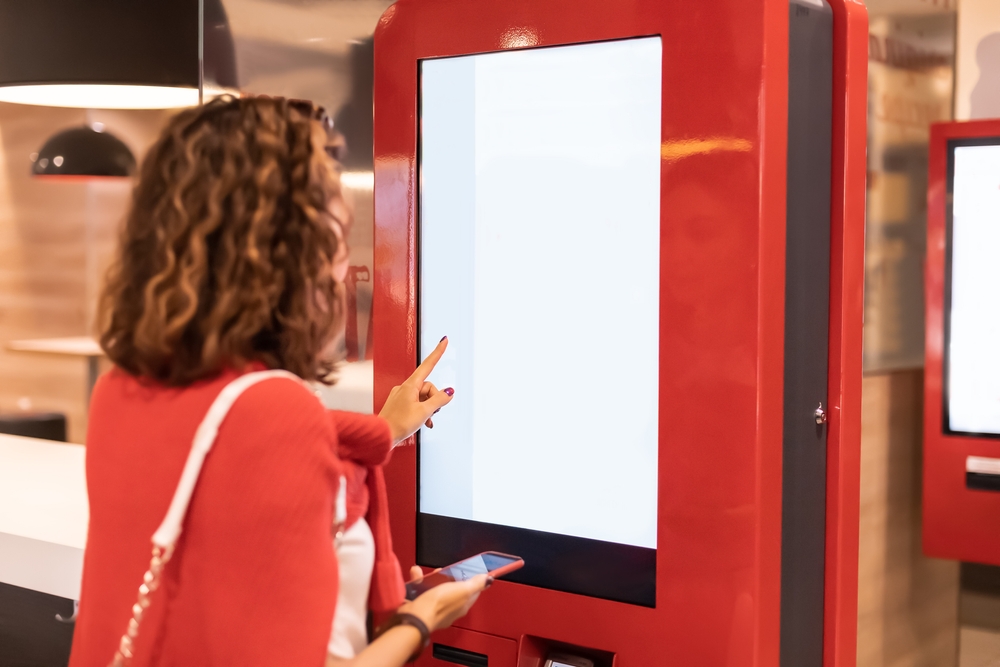
Real-Time Sync: The "Update Once" Rule
In a unified system, updates happen once and flow everywhere automatically. You no longer need to worry about different platforms showing different information. Orders from every channel follow the same rules and logic because your inventory, pricing, and availability are always perfectly aligned.
- Centralized Updates: Change a price or mark an item as out-of-stock once—it updates on your counter POS, self-service kiosks, and every customer's smartphone instantly.
- Seamless Promotions: Launch a seasonal promotion centrally and have it appear across all ordering channels simultaneously without any manual rework or "double-checking."
- Automatic Reconciliation: You can finally eliminate the headache of end-of-day reconciliation because all sales and stock data live in one system from the moment the order is placed.
Labor Optimization: From Takers to Makers
When technology handles the heavy lifting of taking orders and processing payments according to a unified logic, your staff is freed from the role of a human data-entry clerk. They can transition from "order takers" to "experience makers."
With the stress of manual data management removed, your team has more time to focus on food quality, guest hospitality, and maintaining a clean, welcoming environment. This reduction in staff stress leads to lower turnover and a much better atmosphere for your diners.
Data You Can Actually Trust
A unified system doesn't just collect data; it connects it. You gain a 360-degree view of your business that is impossible to achieve with fragmented tools. Which items sell best on mobile versus at the kiosk? What is the peak ordering time across all platforms?
With centralized data, management can finally trust their numbers. You stop guessing and start making strategic decisions based on facts, leading to faster operations and significantly fewer errors.
The 3 Pillars of a Connected Restaurant & How Okya Delivers
At Okya, we don't just provide software; we provide the architecture for growth. Our platform is designed specifically to solve the data disconnect for Thai entrepreneurs. We move beyond fragmented tools to create a seamless ecosystem built on three fundamental pillars:

1. Unified Data Layer: One Source of Truth
This pillar is the foundation of your restaurant’s data integrity. Instead of having separate databases for your POS, kiosk, and mobile app, Okya provides one source of truth for everything that gets sold.
- What this solves: It eliminates the frustration of menu mismatches, prevents broken combos or modifier errors, and stops pricing inconsistencies between your different sales channels.
- The Okya Engine: This is powered by our integrated Product & Menu Management, Pricing & Promotion Engine, and Modifier & Combo Logic.
- The Result: All menus, pricing, and promotions are created once inside Okya. Your POS, kiosks, mobile ordering, and delivery channels don’t maintain their own copies—they pull directly from the Okya core. This removes human error at the root.
2. Real-Time Sync: Instant Global Updates
In a fast-paced dining environment, timing is everything. This pillar ensures that what happens in one channel is instantly reflected everywhere.
- What this solves: No more "double-sold" items, refund chaos, or the kitchen receiving orders for dishes that can no longer be fulfilled.
- The Okya Engine: This bridges our POS, Kiosk Ordering, Mobile Ordering, Kitchen Display System (KDS), and Delivery/Payment Integrations.
- The Result: When a customer places an order anywhere, it flows through the same operational loop: Order → Kitchen → Inventory → Reporting — instantly. If stock runs out on the POS, it disappears from the mobile ordering app and kiosk at the exact same moment.
3. Centralized Control & Visibility: Manage from One Screen
Growth requires oversight without the overhead. This pillar is about managing your entire chain from one single screen.
- What this solves: It ends the era of managers staying late to reconcile reports, eliminates blind spots between different outlets, and ensures your marketing campaigns are consistent across all branches.
- The Okya Engine: This is driven by the Admin Dashboard, Multi-Outlet Management, and Analytics & Performance Reporting.
- The Result: Head office can control menus, prices, and promotions for every location from one dashboard. While each outlet executes locally, management always sees the full picture in real-time, allowing for confident, data-driven scaling.
Choosing the Right Partner
At Okya, we don't just provide software; we provide the architecture for growth. Our platform is designed specifically to solve the data disconnect for Thai entrepreneurs.
- Built for the Floor, Not the Back Office: Okya's interface is built to be intuitive. We know that in a fast-paced kitchen, nobody has time for a complex manual.
- Local Expertise, Global Standards: We understand the nuances of the Thai F&B market, but we build our systems to world-class technical standards.
- Future-Proof Scalability: Our system grows with you. Whether you’re adding more kiosks or opening a fifth branch, Okya scales effortlessly.

From Connected Systems to Confident Growth
Modern dining is about more than just great flavors and a truly connected restaurant is not built on more tools, it’s built on fewer, better-integrated ones. By unifying your POS, kiosks, and mobile ordering system, you eliminate the "noise" of fragmented data and focus on what truly matters: your guests and your growth.
Ready to bridge the gap in your restaurant’s technology?
Book a Demo with Okya Today and see how our unified ecosystem can transform your operation.


