Prompt Pay & Contactless: Reduce POS Queue Times

Prompt Pay & Contactless Payments: Reducing Queue Times with Frictionless POS Checkout

In today’s high-velocity retail and F&B environment, speed is more than convenience—it’s conversion. Especially in Thailand, where customer expectations are high and foot traffic is fast-moving, a delayed checkout can mean the difference between a repeat customer and a walkaway.
As digital transformation sweeps across Southeast Asia, Prompt Pay has emerged as the cornerstone of Thailand’s "less-cash" society. When combined with modern contactless payment technologies, it doesn’t just offer a new way to pay—it revolutionizes the entire Point of Sale (POS) experience. By removing the friction of physical cash and slow card processing, businesses can significantly reduce queue times, boost operational efficiency, and meet the high expectations of today’s tech-savvy consumers.
The Shift to Frictionless Commerce in Thailand
For decades, the "pain of paying" was literal—waiting for change, counting coins, or dealing with slow card terminals. Today, the narrative has shifted toward frictionless checkout. A frictionless experience is one where the payment happens so naturally and quickly that it almost becomes invisible.
Thailand has rapidly emerged as a regional leader in frictionless payments, thanks to a digital infrastructure that rivals far more developed markets. At the heart of this transformation is Prompt Pay, launched in 2016 as part of the government’s push toward a “less-cash” economy. What began as a convenience has now become an expectation—whether you're at a humble street vendor in Chiang Mai or a five-star restaurant in Bangkok, customers expect to simply scan and go.
The shift is cultural as much as technological. Consumers are no longer tolerant of queue delays or clunky payment experiences. In this environment, frictionless checkout isn't just a nice-to-have—it’s the new baseline for doing business.
Why Speed Matters at the POS
Data suggests that customers begin to feel frustrated after just two minutes of waiting in line. In the F&B industry, long queues are the leading cause of "walk-aways"—potential diners who see the line and decide to eat elsewhere. By integrating Prompt Pay and contactless options, businesses can process up to 30% more transactions during peak hours without increasing staff headcount.
Understanding Prompt Pay: The Pulse of Thai Payments
To understand why Prompt Pay is so effective at reducing friction, one must look at its integration with the Thai banking ecosystem.
The Power of QR Code Payments
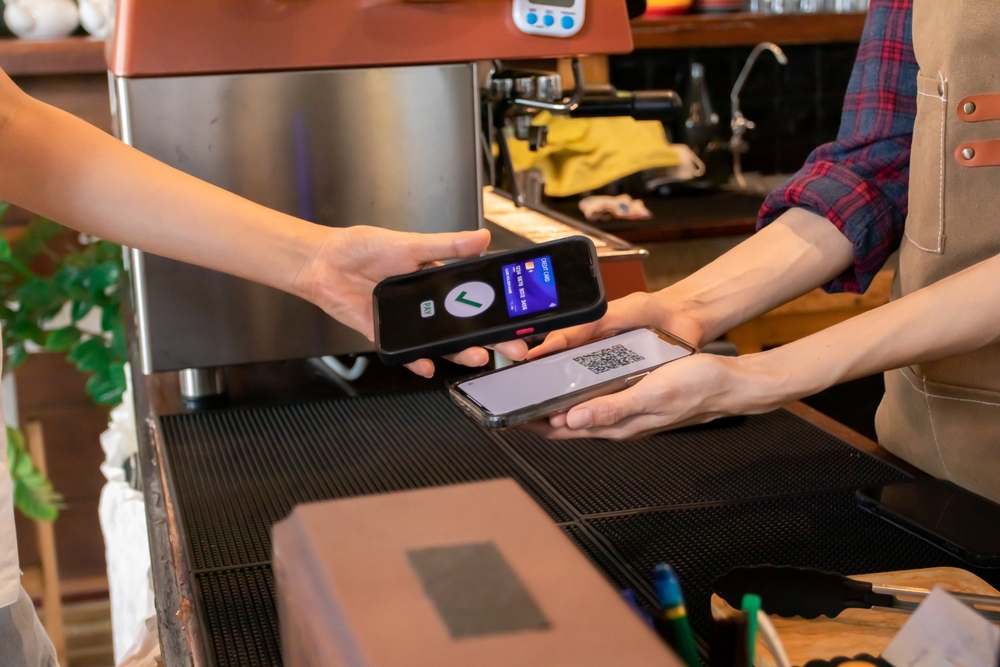
The most visible piece of Prompt Pay is the QR code. For a merchant, this eliminates the need for expensive card terminals and complicated setup. The process is simple and direct:
A customer simply:
- The customer opens their mobile banking app.
- They scan the merchant’s QR code, which may be a static tent card or a dynamic code displayed on a POS screen.
- The customer confirms the amount to complete the transaction.
Lowering the Barrier for Merchants
One of the primary reasons for the rapid adoption of Prompt Pay is the cost structure. Credit card processors typically charge merchants a transaction fee of 2–3%, which can significantly cut into margins, particularly for small businesses. Prompt Pay, by contrast, enables direct bank transfers with minimal to no transaction fees, making it far more appealing to both independent operators and large chains alike.
By eliminating the need for card terminals and reducing associated fees, Prompt Pay empowers merchants of all sizes to participate in Thailand’s digital economy—whether they’re operating a single stall in a night market or managing dozens of locations across the country. This cost-efficiency, combined with wide consumer adoption, has made Prompt Pay the default choice for fast, reliable payments.
How NFC Redefines Checkout Speed
NFC technology allows a device (phone or card) to communicate with a POS terminal via radio waves when held within 4 centimeters of the reader.
- No PIN Required: For small transactions, customers can pay without inserting a card or entering a PIN, removing the friction associated with traditional EMV terminals.
- Instant Authorization: Transactions are approved within seconds, drastically reducing the time it takes to process each customer—especially critical during peak hours.
Biometric Security: When using mobile wallets like Apple Pay or Google Wallet, payments are authenticated using fingerprints or facial recognition, enhancing both speed and safety.

Meeting the Expectations of Global Travelers
As a global tourism hub, Thailand must cater to a diverse range of payment preferences. While locals prefer Prompt Pay, international tourists often rely on contactless credit cards and mobile wallets. A truly frictionless POS system—like the solutions provided by Okya—supports both, ensuring you never miss a sale regardless of your customer's origin.
How Frictionless Payments Reduce Queue Times
In high-volume retail and F&B settings, every second at the register matters. The longer the transaction takes, the more the queue backs up—leading to walkaways, missed sales, and poor guest experiences. Frictionless payments directly combat this by reducing the time it takes to complete a transaction from multiple angles:
- Eliminating Cash Management Bottlenecks
Cash slows everything down. Whether it’s fumbling for change, waiting for receipts to print, or dealing with cash drawers, every interaction takes longer. With Prompt Pay and contactless options, payment is instant—removing human error and administrative lag. The result? Higher throughput and shorter queues.
- Dynamic QR Codes vs. Static Stickers
Traditional static QR stickers (e.g. a laminated code on the counter) require manual input of payment amounts by the customer—slow, error-prone, and not ideal for chains. In contrast, dynamic QR codes—generated in real time by the POS—pre-fill the transaction details:
- The POS displays the QR code with the exact amount.
- The customer scans with their mobile banking app or e-wallet.
- The payment is confirmed and closed instantly in the POS system.
- This "one-scan" checkout flow is the gold standard for modern retail environments, especially during lunch rushes, weekend peaks, or promotional events.
- Integrated Loyalty and Payments
When loyalty is seamlessly integrated into the checkout flow (e.g. via a phone number or QR-linked profile), there’s no need to scan a separate loyalty card, enter an email, or wait for a receipt with a promo code. With OKYA, loyalty points can be automatically accrued or redeemed at the same moment the transaction is approved—creating a unified and ultra-fast experience for both staff and guests.
The Business Benefits of a Frictionless Checkout
While faster lines and happier customers are the most visible perks of adopting frictionless payments, the real power lies in the operational and strategic advantages these systems unlock.
- Real-Time Analytics and Reporting
Digital payments generate instant, structured data—unlike cash transactions, which often require manual reconciliation and suffer from input errors. With OKYA’s integrated POS and payment stack, you get:
- Live sales data, broken down by time, channel, and payment type.
- Visibility into peak hours, payment trends, and store-by-store performance.
- Faster closing and reconciliation processes, reducing manager workload.
This empowers HQ and franchise owners alike to make data-driven decisions on the fly—from staffing to stock replenishment to promotions.
- Enhanced Security and Hygiene
Frictionless payments aren’t just about speed—they also eliminate two major business risks:
- Theft & Shrinkage: Less cash on-site means lower risk of internal theft or robbery.
- Germ Transmission: Contactless payments reduce physical contact between staff and customers—an important consideration in a post-COVID world.
By eliminating both cash handling and physical cards, businesses improve staff safety, cleanliness, and brand trust—especially in QSR and hospitality environments where food handling and hygiene are top priorities.
- Boosting Average Order Value (AOV)
The ease of use in mobile or tap-to-pay transactions reduces friction at the point of decision. This behavioral shift has a measurable impact on spending:
- Customers are more likely to add last-minute items (like drinks or desserts) when payment is quick and seamless.
- Integrated loyalty programs can trigger on-screen upsells or point-based incentives at checkout.
- Faster checkout means staff can process more orders per hour, especially during high-volume shifts.
Studies across multiple markets show that AOV increases by 12–18% when moving from traditional to digital-first POS environments.
Implementing the Right POS Strategy with Okya
Successfully reducing queue times takes more than just accepting digital payments—it requires a fully integrated ecosystem that connects payments, operations, and customer experience in real time.
At Okya, we don’t just offer POS terminals—we provide restaurant chains and retail brands with the infrastructure to scale in the digital age. From dynamic QR code payments to contactless terminals, our solutions are built for high-volume environments where speed, reliability, and centralized data are critical.
With Okya, businesses can unify payment processing, loyalty programs, order management, and performance analytics—all from a single platform built for growth.
And for businesses ready to go beyond just faster transactions?
Self-Ordering Kiosks and QR Table Ordering
Okya helps eliminate the checkout line altogether. Our kiosk and table-side solutions empower customers to browse, order, and pay at their own pace, while keeping your operations fully in sync.
- Kiosks: Intuitive, high-speed interfaces perfect for busy lobbies and quick-service environments.

- QR Ordering at the table: Guests scan, browse, and order from their seat—streamlining dine-in service and reducing pressure on front-of-house staff.

Conclusion: The Future of Retail is Frictionless
The adoption of Prompt Pay and contactless payments is no longer just a trend; it is the new standard for doing business in Thailand. In today’s convenience-first economy, speed at the checkout is no longer a nice-to-have; it's a competitive advantage.
By reducing queue times, you aren't just making your operations smoother—you are telling your customers that you value their time. Whether through integrated QR codes, NFC tap-to-pay, or advanced loyalty automation, the goal remains the same: a checkout experience that is fast, secure, and entirely frictionless.
Ready to transform your checkout experience?
Explore how Okya’s All-in-One POS Solution can help you scale your business and delight your customers.


